Living the Dream.


Showing posts with label DIMEFILS. Show all posts

Wednesday, August 30, 2017

re: "We're taking the 2nd ausfahrt prior to the Friendship Bridge, it seems"

Phibian at Cdr Salamander ("PROACTIVELY “FROM THE SEA”; AN AGENT OF CHANGE LEVERAGING THE LITTORAL BEST PRACTICES FOR A PARADIGM BREAKING SIX-SIGMA BEST BUSINESS CASE TO SYNERGIZE A CONSISTENT DESIGN IN THE GLOBAL COMMONS, RIGHTSIZING THE CORE VALUES SUPPORTING OUR MISSION STATEMENT VIA THE 5-VECTOR MODEL THROUGH CULTURAL DIVERSITY.") evaluated Pres. Trump's plan for Afghanistan.

Money quote(s):

"(H)ere’s the Executive Summary: two of the best military minds of their generation, National Security Adviser McMaster and Secretary of Defense Mattis, helped develop a plan that they believe gives us a chance to salvage something in Afghanistan after seven years of dithering. Not a perfect plan, but a doable one. I am willing to give them the benefit of the doubt and fully support it. The major reason is that it returns to something I have written about for well over a decade, Conditions Based Planning, and throws away what remains of the Obama Administration's bollocked-up Calendar Based Planning."

As he stated later in his post, "with a calendar based plan, defeat is inevitable; it is only the timing and method that is in question"  

As a businessman, some of Pres. Trump's ventures have failed, gone bankrupt.  But no one should assume that was the intended goal.  Trump likes to win.  Any plan he attaches to his name-brand is, at the very least, intended to succeed.  Trump does not like losing.

"That is where Trump went Salamander. We are back to Conditions Based Planning – what military best practices tells us is the best path to success.
Another fundamental pillar of our new strategy is the integration of all instruments of American power — diplomatic, economic, and military — toward a successful outcome. Someday, after an effective military effort, perhaps it will be possible to have a political settlement that includes elements of the Taliban in Afghanistan. But nobody knows if or when that will ever happen.
Did you get that? All the traditional levers of national power. This is not just a military way forward. We are also willing to come to accommodation with SOME of the Taliban elements. Good to open that door."

Why ever might the phrasing "traditional levers of national power" ring a bell for even a larval student of strategy?  This might be why it's not always a bad thing to ex-generals and ex-admirals around the top levels of the national security apparatus, so long as you're very picky about the ex-generals and ex-admirals.  Not every problem is best treated as a nail, especially when you've got a whole toolbox to work with.

He concluded:

"For those looking for End States, Objectives, Decisive Points, Criteria for Success, etc – this isn’t the venue for that. This speech gives us approximately the Commander’s Intent and Initiating Directive. The Operational Planners can build a plan off that, and are."


Wednesday, August 16, 2017

The Hill - 6 ways to know if State Department reform is real or fake

Joseph Cassidy writing at The Hill makes some excellent points.

Money quote(s):

"A real reform plan would mobilize the department to confront the dangers of the 21st century. It would remedy organizational weaknesses and inefficiencies. It would clarify State’s role in formulating foreign policy and define its relationship with other U.S. government agencies. It would provide a sense of purpose to State’s dedicated but downtrodden employees. "

That right there looks like an pretty fair mission statement for departmental reform.

"In recent administrations, the State Department’s structure has been more hourglass than pyramid. Senior officials and their staffer remoras have been over-abundant and have consumed a disproportionate amount of the department’s workload. Real reform would cut senior positions and reduce the number of staff officers who don’t originate work product."

&

"There is widespread agreement that the weedy proliferation of special envoys (not just those with that specific title, but also other powerful single-issue envoys outside State’s regional and functional bureau chains of command) must be pruned. Real reform will substantially reduce their number but also ensure that important responsibilities are incorporated into other parts of the department (double-hatting officials with a special envoy title, when its termination would be politically or diplomatically problematic).

Envoy proliferation has had two pernicious consequences — disempowering regional bureaus (which should rather be reinforced) by removing important diplomatic issues from their control and ensuring regional bureaus don’t in practice follow “special envoy” issues as closely. Real reform will mainstream as well as streamline."

This.  The dozens of special envoys and such duplicating and tromping over the responsibilities of existing embassies and missions is overkill.  Even granting the half-dozen or so (seven?) actually mandated by law, the idea of dual-hatting some of those back into the fold, onto the worthy-brows of the officials already charged with those countries, regions, or issues is one well worth exploiting.

(Gotta love the use of "remoras" to describe the spear-carriers and special assistants attending to extraneous special envoys.)

"Too many otherwise smart people believe diplomacy is something separate from other elements of national power, e.g., that the James Mattis does national defense, the Treasury Department does international finance and sanctions, the Commerce Department helps U.S. business abroad, the Department of Justice does international law and State carries messages back and forth to other governments like an Amazon delivery drone.

Diplomacy without foreign policy content is irrelevant, and there’s no such thing as short-term strategy. Real reform would reassert State’s role as lead strategist and coordinator of U.S. foreign policy, including the current actions of other cabinet agencies and America’s role in the world over the next several decades. "

You can bet that Sec. Mattis knows very well the many aspects of national powers, DIMEFILS and similar mnemonics outlining the instrumentalities and elements of implementing national strategies and grand strategies.  State is a logical place for interagency coordination of national strategy although the National Security Council staff seems to have inherited that mantel of late.

Read the whole thing.

Friday, August 10, 2012

re: "Is the United States a Militaristic Imperialists Nation?"


Money quote(s):

"Several weeks ago, Tom Dispatch published an extended article on the shadow war in Africa. In part it questioned why the United States military has divided the world into six fiefdoms or Combatant Commands."

Note to State Dept. readers: don't click on any of the Tom Dispatch links since you'll just get one of those scary "wikileaks" warning notices.

"The short answer is they are a continuation of our division of the world during World War II into Theaters of War. In fact they are often referred to as Theaters by today’s military. But that is not the sole reason. The United States being the dominate Western partner in our Cold War against global communism required the ability to establish priorities for the employment of our military. Lastly, today’s Combatant Commands and the defined power of the Commander[1], is an outgrowth of the debacle that was Grenada and Lebanon in the early 80’s. In the case of Grenada it was each service Chief adding their forces to the mix resulting in a Cluster Firetruck. In the case of Lebanon it was the failure of United State European Command to accept responsibility of the bombing in Beirut that left countless Marines dead. As a result in the Goldwater-Nichols Act the power of the services over operational matters was severely constrained and the Combatant Commanders were ultimately responsible for determining which military capabilities were required for a specific operation."

Townie76 noted three consequences of the above, including these two:

"(T)he Combatant Commanders have become de Facto Pro Counsels (sic) for their respective Regional Commands. In many cases they are the representatives of the United States Government who have the most exposure in their particular Theater. As such Military Power has become the dominat (sic) element of the United States National Power (Diplomatic, Informational, Military, Economic.)

Second, the Department of Defense regional division of the world differs from the Department of State regional division of the world. Thus the Department of State Regional Director for Near East must coordinate diplomatic activities in two Combatant Commanders Areas of Responsibility (Africa Command and Central Command). More importantly, while attempted with Africa Command, there is generally no high ranking member of the Foreign Service within the Headquarters of the Regional Combatant Commands. The only presence in the Regional Combatant Commands is the Political Advisor who is a Senior Member of the Foreign Service but from my experience has little influence inside the State Department."

The morphing of military commanders into imperial proconsuls is a criticism that's been leveled before, going back many years. Combatant commanders used to be called commanders-in-chief until the point was made, forcibly, that under the Constitution there is only one commander-in-chief.

Political advisors, despite their relatively high rank within the Foreign Service (i.e., flag or general officer equivalents) encumber positions which are, not surprisingly, advisory. They exist within the combatant command's headquarters, without bringing any non-DoD resources to the table other than their own expertise, as staff officers.

(This is not meant as a criticism, only to realistically define their role.)

"The question that should be debated not only by the military but also by an informed citizenry is the organization of the Regional Combatant Commands making the United States imperialistic in the execution of its foreign policy?

I have believed for a long time that there is a need for a new National Security Act for the 21st Century.[2] Among the provision I would like to see is the common alignment of Regions across the entire federal government. While there may be arguments for different divisions it seems that a whole government approach would benefit from all the players reading off the same script. I think it also time to consider rather than having the Department of Defense Combatant Commanders being the lead that perhaps it is time of the Department of State to take the lead."


7/29

Saturday, April 7, 2012

DIMEFILS

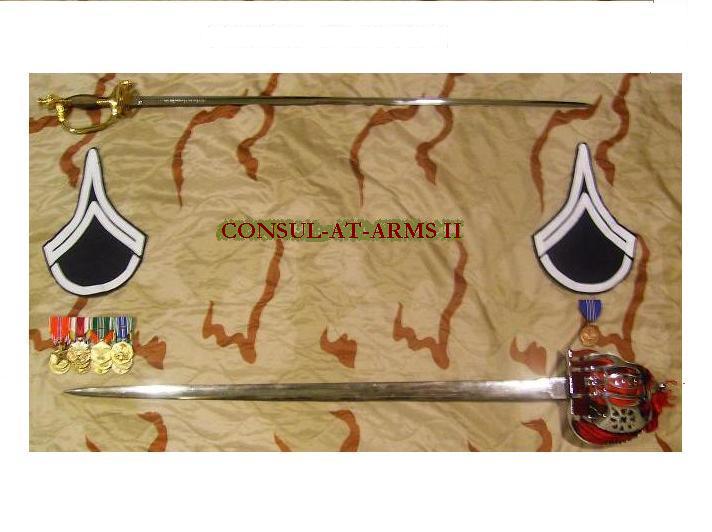
I put the "C" (for "Consular") in DIMEFILS.

Friday, January 13, 2012

re: "We Deserve Better"

Digger at Life After Jerusalem ("The musings of a Two-Spirit American Indian, Public Diplomacy-coned Foreign Service Officer") explained the motivation.


Money quote(s):


"Nobody joins the Foreign Service to get rich.


We join for a miriad of reasons, but scratch most of us in the Foreign Service and you will find a deeply patriotic American.We endure harsh conditions in war zones and other inhospitable places. We endure separations from our loved ones, sometimes for years. We endure diseases and environmental conditions most Americans would never consider subjecting their families to."


"Rich." (That's rich.)


Excuse me if Digger's recitation of FS working/living conditions may sound (to some readers) like whining, but it's simply a factual relating of the facts. American diplomats deploy on multi-year tours around the world, not just to the handful of countries most military veterans will be familiar with.


(And we take our families with us.)


Often that's simply a good thing, but it is not an unalloyed "good thing."


"We serve because we believe. We believe in this country. We believe in serving it. We believe that in order to be strong, this country needs both military and diplomatic strength."


Students of strategy will recognized that Digger has correctly identified two of the elements of national power present in DIME.


11/8

Friday, December 2, 2011

re: "After 9/11 anniversary: the return of US diplomacy"

Nicholas Burns at the Christian Science Monitor wrote a great piece on the future of U.S. diplomacy.


Money quote(s):


"During these last 10 years, the US has fought two major land wars simultaneously. It has conducted an aggressive, controversial, and dangerous military campaign against terrorist groups from Iraq to the Afghan/Pakistan border to Somalia and Yemen. And America has transformed the way it defends itself from the terrorist threat at home and overseas.


The US has relied on the military to hit back when attacked or even threatened, to place first priority on building up defenses, and to sometimes shoot first and ask questions later. Much of this made sense in the months immediately following the shocking new threat that appeared with such sudden and terrible force in New York and Washington on September 11, 2001."


Students of strategy, grand or otherwise, already know that both military force and diplomacy are only two of the dimensions in which state (and non-state) actors operate.


DIME, anyone?


"(U)nlike the years following 9/11, the most difficult challenges ahead will require greater reliance on a combination of diplomacy and traditional statecraft and all that comes with it. That includes negotiating with odious regimes, threatening and cajoling them – but more often overcoming them through the strength of our political alliances – to get our way in the world.


This return of diplomacy to center stage in American foreign policy will take many different forms.


First, diplomacy is ascendant in the costly, ill-defined, and inconclusive wars in Iraq and Afghanistan that will end not on the battlefield but at the negotiating table. President Obama’s decision to remove combat forces in Iraq and ask the State Department to lead at the end of this year is sensible and long overdue. The US will also need to negotiate its way out of Afghanistan in the next few years as a conventional military victory there is unattainable."


Note the "conventional" qualifier on "military victory" in that last sentence. Still an arguable proposition, not quite a foregone conclusion, and there's lots of room for discussion as to what "conventional" warfare actually involves.


"This renewed commitment to diplomacy is critical for America’s national strategy. It is the most practical and effective way to coalesce with allies and friends as well as to confront foes in the decade ahead. That is why leaders in Washington should make the same commitment to rebuild the State Department as they did with the Pentagon, CIA, and Homeland Security in the years following 9/11. Congress fully funded those three pillars of national security but starved the fourth and equally important pillar – diplomats and USAID professionals."


Strangely, the fourth pillar tends to be the least expensive of them all; which is ironically one reason it's so politically easy to call for cuts in diplomacy and (because they're not actually the same thing) foreign aid budgets.


Let me walk you through that thought: not only are the dollar amounts smaller, but since they tend not to be spent in any congressmen's districts, employing more than a handful of their constituents, there's no immediate political price to be paid by any individual congress person.


It's not that U.S. diplomats and USAID staff don't vote, even when assigned overseas, but they're so relatively few, so difusely dispersed throughout the U.S., that no single politician has more than a handful in their district.


Not only that, but those deployed abroad have to cast absentee ballots, which (along with military overseas ballots) tend to get tossed out on technicalities or only counted long after the election results are actually announced.


"After 9/11, President Bush essentially put the military on the front lines of America’s international engagement all over the world, with the diplomats in reserve. The military became in the minds of politicians and in the public imagination the default choice for dealing with international problems."


And Pres. Bush was, fairly obviously, correct to have done so, disagree though you may with how he prioritized those military campaigns or implemented them.


Of course, even with the military in the forefront, there was action in most of the other dimensions of national policy, if only in support of those military efforts.


"America will face in the next few years the most dangerous and complex set of international challenges in recent memory. As it returns to diplomacy, political leaders at home must also resist the pernicious allure of isolationism so evident on the extreme right and left of the political spectrum. Americans must instead renew their global leadership role as the country moves further away from the tragedy of 9/11 and encounters the more complex times ahead."


Isolationism is a sucker's game, even for relatively insular Americans, and the voters know it. The real question is to what degree U.S. will be engaged internationally and in what arenas.


_____


Who is the writer?


"Nicholas Burns is professor of the practice of diplomacy and international politics, and director of the Future of Diplomacy Project at the Harvard Kennedy School’s Belfer Center for Science and International Affairs. He served as under secretary of State for political affairs from 2005 to 2008. Previously, he was US ambassador to NATO."


Also:


"Burns served in the United States Foreign Service for twenty-seven years until his retirement in April 2008. He was Under Secretary of State for Political Affairs from 2005 to 2008; the State Department’s third-ranking official when he led negotiations on the U.S. – India Civil Nuclear Agreement; a long-term military assistance agreement with Israel; and was the lead U.S. negotiator on Iran’s nuclear program. He was U.S. Ambassador to NATO (2001–2005) and to Greece (1997–2001) and State Department Spokesman (1995–1997). He worked for five years (1990–1995) on the National Security Council at the White House where he was Senior Director for Russia, Ukraine and Eurasia Affairs and Special Assistant to President Clinton and Director for Soviet Affairs in the Administration of President George H.W. Bush. Burns also served in the American Consulate General in Jerusalem (1985–1987) where he coordinated U.S. economic assistance to the Palestinian people in the West Bank and before that, at the American embassies in Egypt and Mauritania.


Professor Burns has received twelve honorary degrees, the Secretary of State’s Distinguished Service Award, the Woodrow Wilson Award for Public Service from the Johns Hopkins University, and the Boston College Alumni Achievement Award. He has a BA in History from Boston College (1978), an MA in International Relations from the Johns Hopkins School of Advanced International Studies (1980), and earned the Certificat Pratique de Langue Francaise at the University of Paris-Sorbonne (1977). He was a visiting Scholar at the Woodrow Wilson Center for International Scholars in summer 2008."


_____


As the Foglio's might say, he's a "schmat" guy.


9/9
Monday, July 25, 2011

re: "China: Please Repudiate Your T-Bills That We Own And Impose Trump-Level 1000% Tariffs On The Shoddy Crap We Sell You"

Ace at Ace of Spades HQ knows (as does China) that warfare is fought in many dimensions.


Money quote(s):


"This was sort of inevitable, and it's pretty bad. China has long supported every indecent country in the world, because America has alliances with most of the decent ones."


China has, and has had, for decades, a Non-Interference Policy (NIP). That essentially meant that it would do business with you and not worry overmuch about your internal affairs. Sort of the stance China would like the rest of the world to take regarding China's internal affairs.


"China has now made it official: an attack on Pakistan (terrorist hunting) is now to be taken as an attack on China.


They have extended their own security zone to the terrorist state of Pakistan, which means China is now officially a terrorist sponsor."


Ace is, as usual, a few steps ahead of the rest of the United States, including with regards to treating the state of Pakistan as an actual enemy of the U.S., rather than as a partner in the war on terrorism, &tc.


I'm not saying he's necessarily wrong, but perhaps prematurely right.


"(L)ucky us. We just found a trillion and a half dollars we thought we were in the hole for, but now we're not."


Chinese strategists plan for assymetrical operations in all theaters, all dimensions, of war, particularly against peer or near-peer opponents. Included in those battlefields will be the financial and economic dimensions. Being prepared to return fire effectively isn't the worst idea I've ever heard.